THE SHAMANIC

There is a throughline in me, one that always been studying the shamanic. Since I can remember, I have had an interest in the boundaries between the seen and unseen. More formally, I started my shamanic training in 2014, in sessions with my teacher Leila Lees.
I started working in circle in 2018, and the circle has evolved over that time into a core group who I have studied with for the past five years. Working with the same people over this time, the learning goes deep. The witnessing of many perspectives, holding compassion for all our roles and stories, all the experiences and feelings that we weave into a life.

The shamanic is a realm of the human imagination, a powerfully real place. The shamanic is interwoven with the whole world, the natural world, the world of feeling and of mystery.

I have just completed the four year training with Lasavia Healing, incorporating many aspects of classical shamanic practice, and incorporating the essence remedies created by Leila. The tools of the shamanic include the drum, the rattle and the mask. The shamanic is visual, sensual and visceral. The shamanic looks to create balance in the whole, seeing and listening for patterns of potential transformation.

I recently offered my first shamanic bodywork session, and look forward to integrating the other forms of training I have undertaken – massage, aromatherapy, meridian activation, hands on and energy field healing.

I was asked to hold a land and home healing session recently. It was the first time outside of my training that I was using these skills, and they felt very natural. In a session, I connect with my support and neutralise my body in order to allow feeling and images to arise.
My feet connect with the land and walk me. My voice, my rattles and my drum interact with vibrational dimensions and offer up prayers of release, integration and flow. I understand healing to offer openness to change, sometimes disruptive, always working towards harmony. These changes may manifest subtly, the transformative work in our energetic fields cascading into our cellular structure as we incorporate understanding, balance and wisdom.

I am starting my practice from here.
Contact me if you are interested in working together.

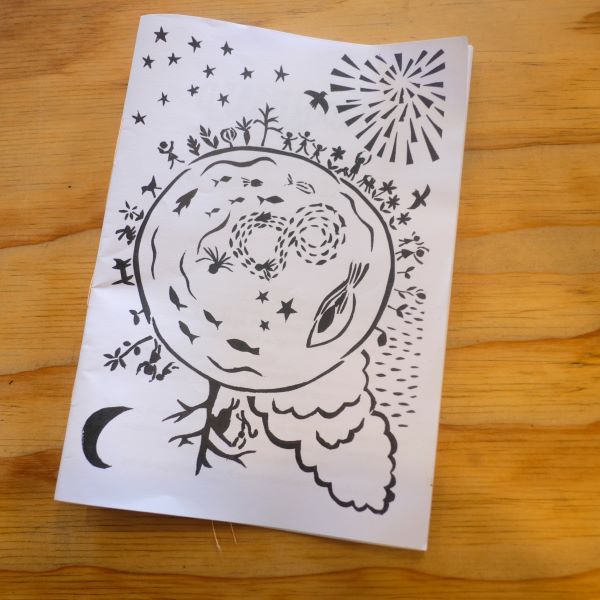
The Greenspace Co-op summer Zine #3

The Greenspace Summer Zine #3 is here for you! Sign up as a patron at patreon.com/thegreenspaceproject and receive a real live copy in your mailbox (just let us know your postal address via kaitiaki@greenspace.nz)

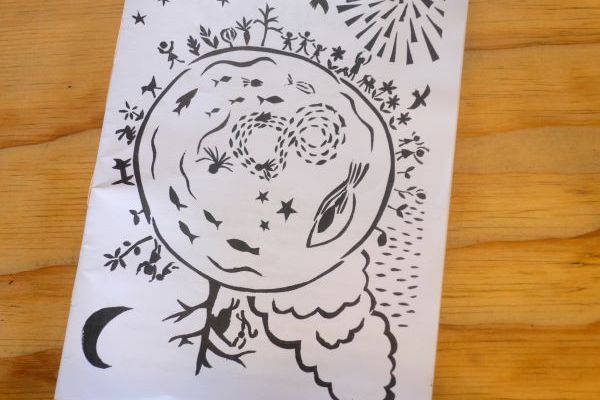
A5 black and white photocopied goodness, with a beautiful screenprint on the cover by Hana from https://www.creativeopenspace.nz/

Contributions inside from the Greenspace Collective, offering inspiration and contemplation for the summer season.

The Greenspace Co-op spring Zine #2

The Greenspace Spring Zine #1 is here for you! Sign up as a patron at patreon.com/thegreenspaceproject and receive a real live copy in your mailbox (just let us know your postal address via kaitiaki@greenspace.nz)

A5 black and white photocopied goodness, with a beautiful screenprint on the cover by Hana from https://www.creativeopenspace.nz/

Contributions inside from the Greenspace Collective, offering inspiration and contemplation for the spring season.

The Greenspace Co-op Winter Zine #1

patreon.com/thegreenspaceproject

The Greenspace Winter Zine #1 is here for you! Sign up as a patron at patreon.com/thegreenspaceproject and receive a real live copy in your mailbox.

36 pages of A5 black and white photocopied goodness, with a beautiful screenprint on the cover by Hana from https://www.creativeopenspace.nz/

Contributions inside from all the Greenspace co-op volunteers, offering inspiration and contemplation for the winter season.

$3 or $5 tier for Waiheke Island locals will get your zine delivered to your mailbox

$5 or $9 tier for around Aotearoa NZ or

$9 or $17 tier for the rest of the world

You only have to sign up for one month to get your cool magazine – cards are charged in USD on the 1st of the month, and I will contact you to confirm your postal address…

#thegreenspaceproject
#therealnessworld
#regeneratingculture

The Greenspace Project

greenspace-bloom

About 13 months ago now The Greenspace Project claimed me. We had sold our house and didn’t have a clear next plan. Meanwhile the local organic shop was for sale. I didn’t buy the business, but a seed was planted.

I want to explore my Theory of Everything within the everyday, and because I also need a job, I am doing this within the format of one of the oldest trades, shopkeeping. One version of a theory of everything is permaculture. I am pretty sure you can use permaculture principles to look into really anything you choose:

Observe and interact.

Catch and store energy.

Obtain a yield.

Apply self-regulation and accept feedback.

Use and value renewable resources and services.

Produce no waste.

Design from patterns to details.

Integrate rather than segregate.

Use small and slow solutions.

Use and value diversity.

Use edges and value the marginal.

Creatively use and respond to change.

Greenspace is a permaculture hub, a design studio, an art gallery, an organic shop, an events space, a social centre. Greenspace is my PhD in shopkeeping, the ancient art of commerce and culture. I am curious about the balance between the hybrid format and the financial requirements for success. I am hoping I can keep doing this job for a while.


City Loops: Reserve Contribution


City Loops >
Reserve Contribution >

“We are bored in the city, there is no longer any Temple of the Sun.”
Ivan Chtcheglov, Formulary for a New Urbanism
October 1953, printed in Internationale Situationniste #1

Not only this, but as buildings get taller, less and less sun ever reaches the ground. Developers pile storey upon storey, maximising floor space and high end inner city rents. Space on the ground costs so much money that the ground itself must be multiplied over and over, or it is not counted as having paid its way.

The Situationist International’s critiques of modern cities still feel relevant. Debord’s vision of the spectacle, the always-hungry machine of modern culture, only seems more entrenched now than sixty years ago. The Situationist International, a weird and angry boys club (and Michèle): artists, poets and provocateurs, they set out to understand and change the city for themselves.

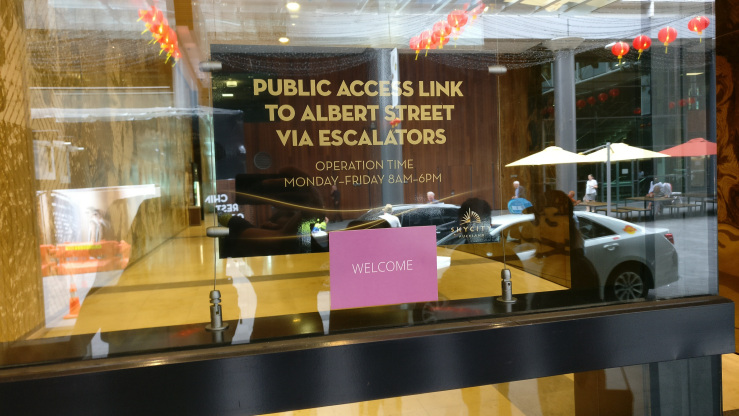
Protections are in place. The Council makes rules about the ratios of building heights to boundaries, but regularly trades out these rules for higher fees, and if we the people are lucky, some public benefit: an artwork, a walkthrough, a lobby – these are the little-known privately owned public spaces of Auckland city. They are places where one might find a faster way through, out of the heat or the rain, or a place to sit without being obliged to eat only the food that has been purchased here, or a view of the harbour usually obscured by layers of reinforced concrete.

And so, a small group of artists, a weird and angry girls club (and Joe), has come together to situationise the situation, to scope the psychogeography of our town.

We have created for ourselves a heightened awareness of what it is to negotiate a city. Walking through as a track, a record of a time. We have met in fancy lobbies and left behind prelimary guides and seedlings for others to find. Bringing food from elsewhere, claiming public space for shared meals. Witnessing others in their negotiated relationships with the space of the city. A knitting club in Queens Arcade, bring and share teabags, packets of biscuits open on the table.

The Council has bought our rights to be there. They have traded these spaces for larger buildings, exceeding the restrictions of the district plan. Are we angry or are we grateful? At the Vero building we are pretty happy. At the ASB building, we are less than impressed.

I aim for an awareness of the sacred in the everyday, and this communion with a group of artists – people who by nature and practice think in connection and layers – is a sacred gathering. A small and occasional Temple of the Sun.